
Cleaning through movement
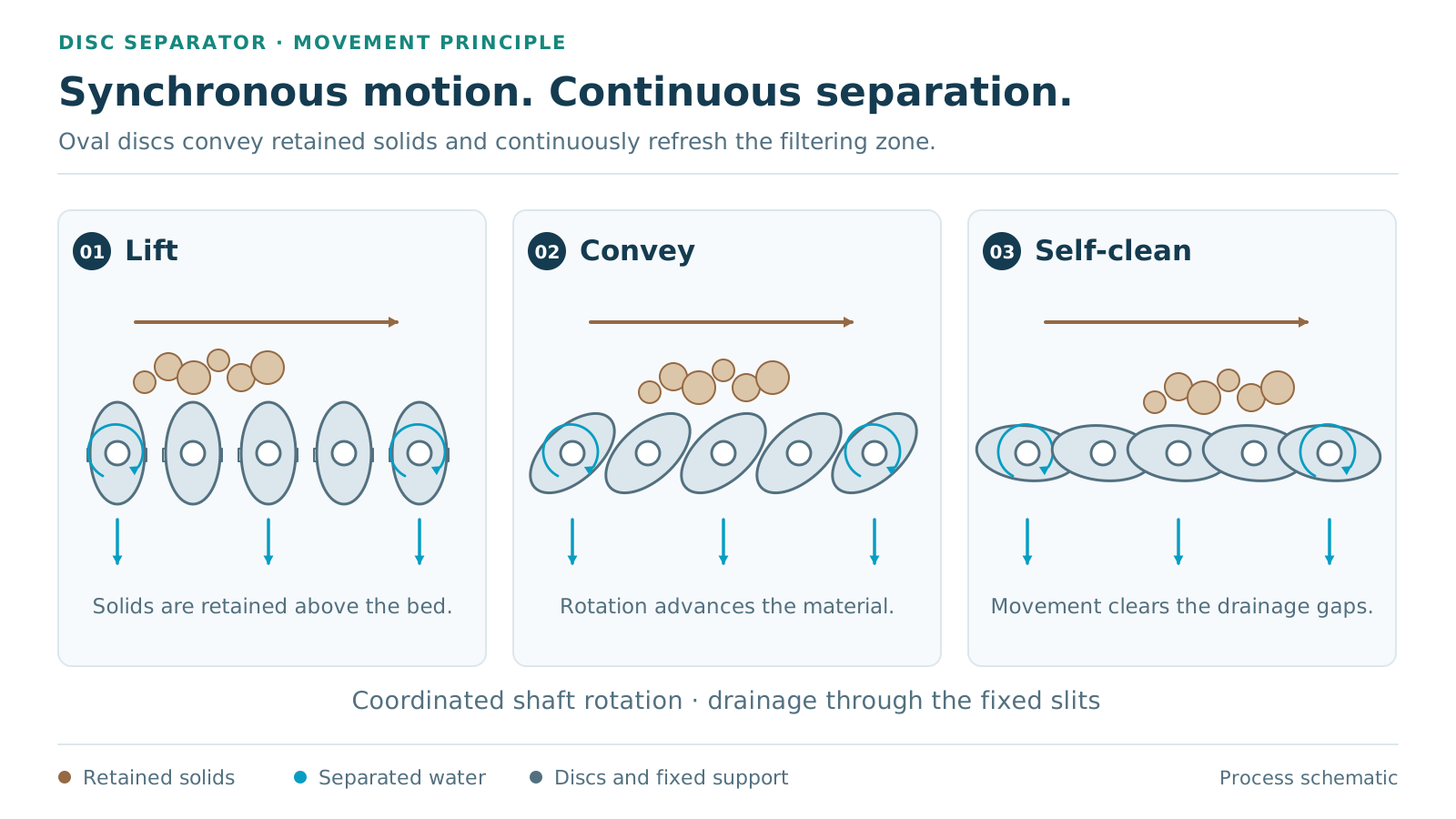
Synchronous disc rotation helps clear the drainage gaps.


Synchronously rotating oval discs for screening, thickening or dewatering. Continuous mechanical separation adapted to your stream and treatment objective.
Choose the duty. Configure the separation.
Gaps between the discs allow liquid to drain. Rotation conveys retained solids and keeps the separation surface active. Depending on its configuration, the unit operates as a screen, a thickener or a dewatering unit with a pressure plate.
Synchronous disc rotation helps clear the drainage gaps.

Retained material moves towards discharge as liquid separates.
Gap, loading and speed are selected for the material being treated.

One equipment family for screening, thickening and dewatering.

Open arrangement for inspection and maintenance of components.

Drive power matched to capacity and operating duty.
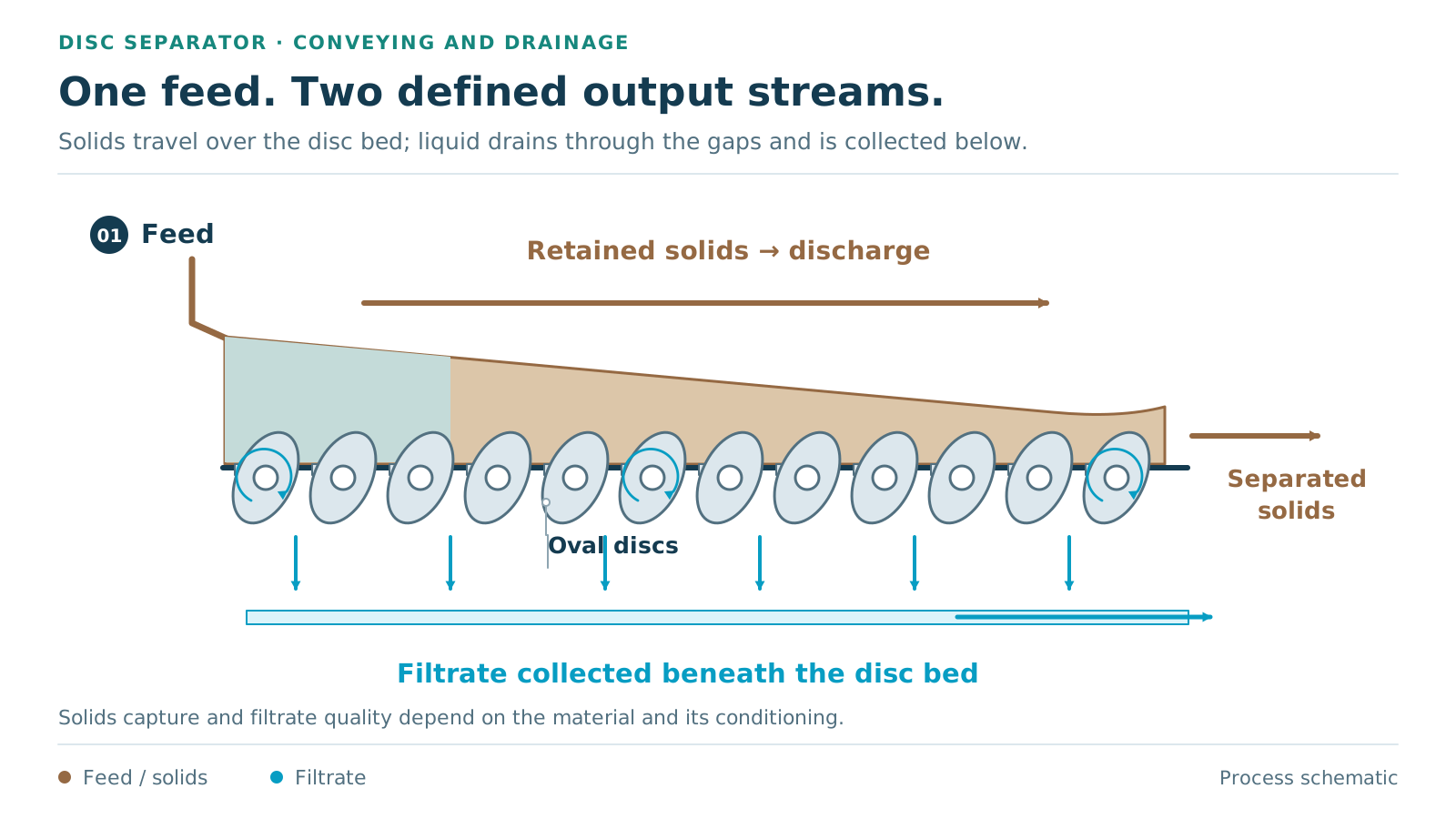
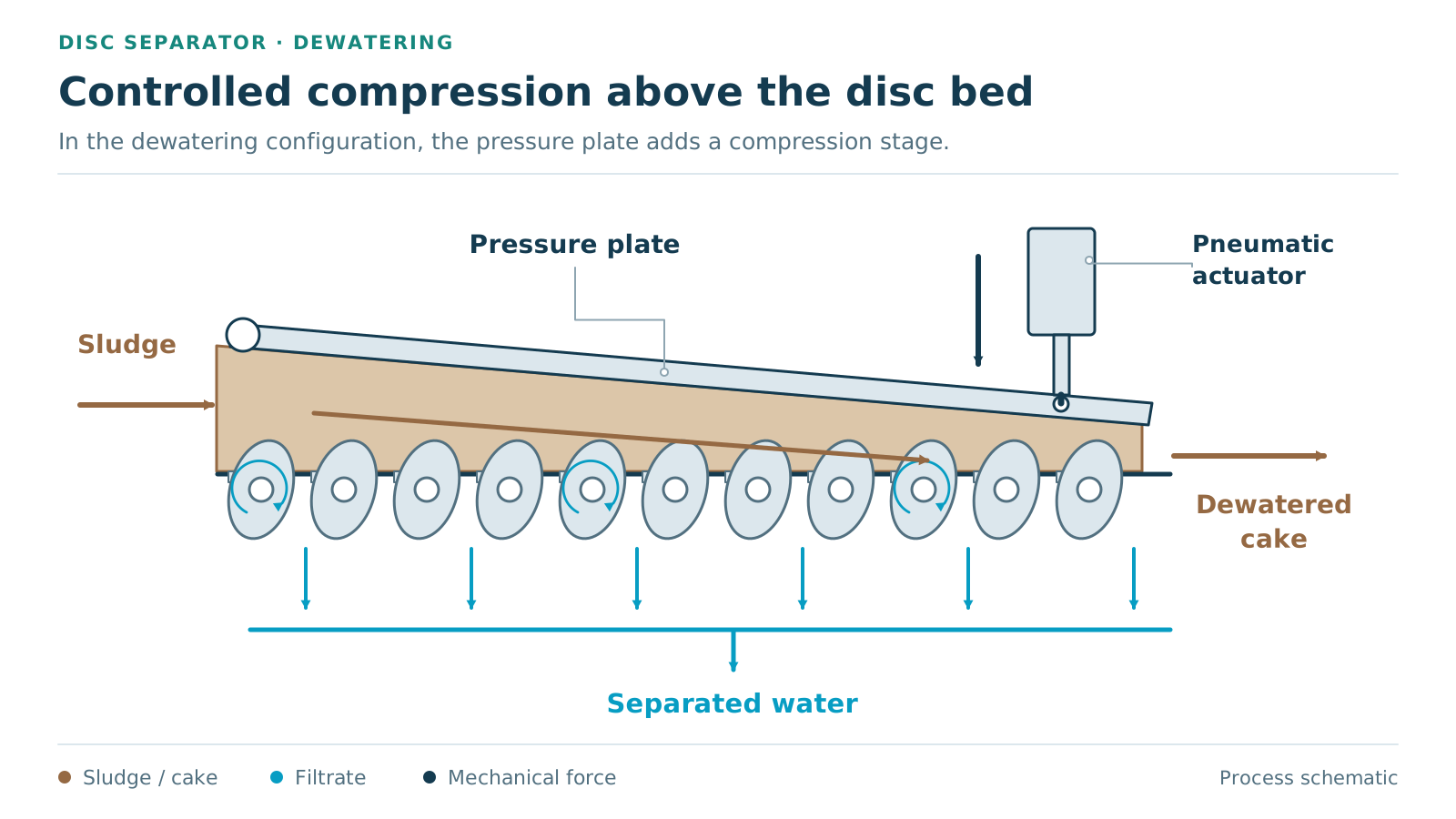
Screening retains a solid fraction. Thickening removes liquid to increase concentration. Where a cake is required, back pressure is added and feed conditioning is adjusted.
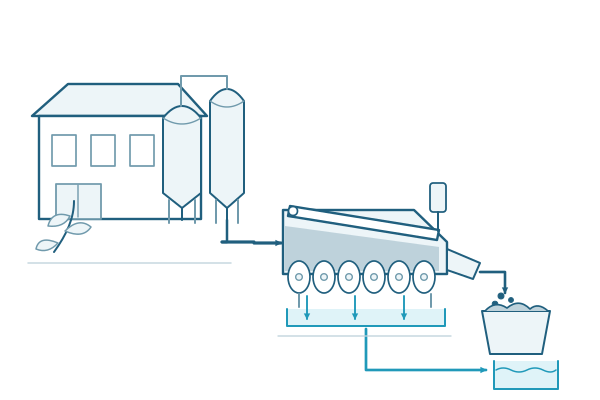
Kitchen residues and process solids.
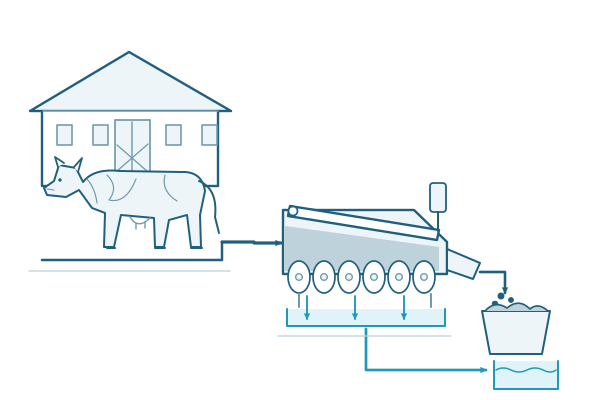
Manure slurry and milking wastewater.
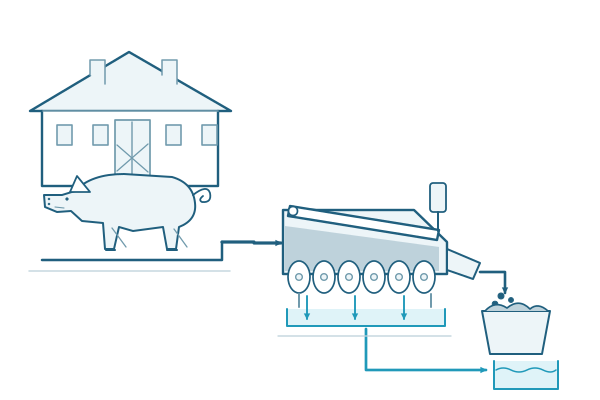
Manure slurry solids separation.
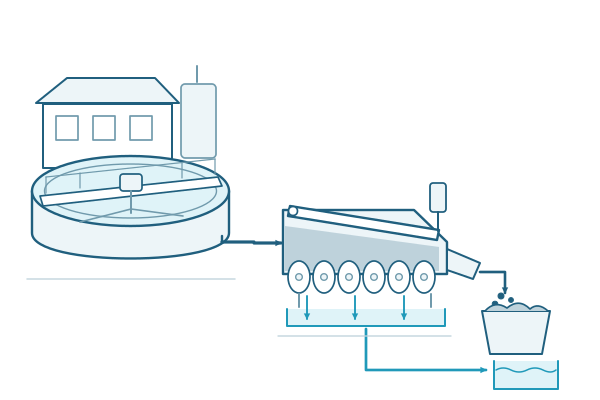
Inlet screening and sludge.
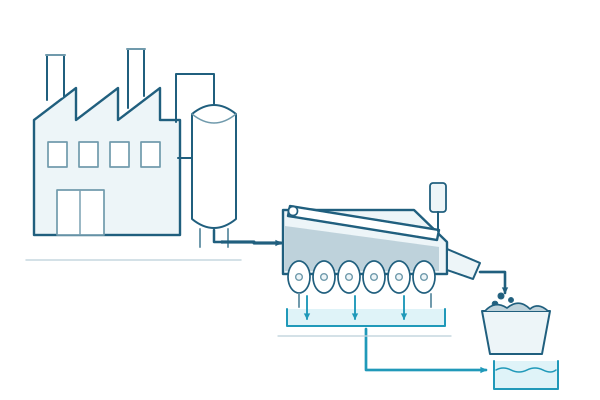
Plastics, paint and compatible streams.
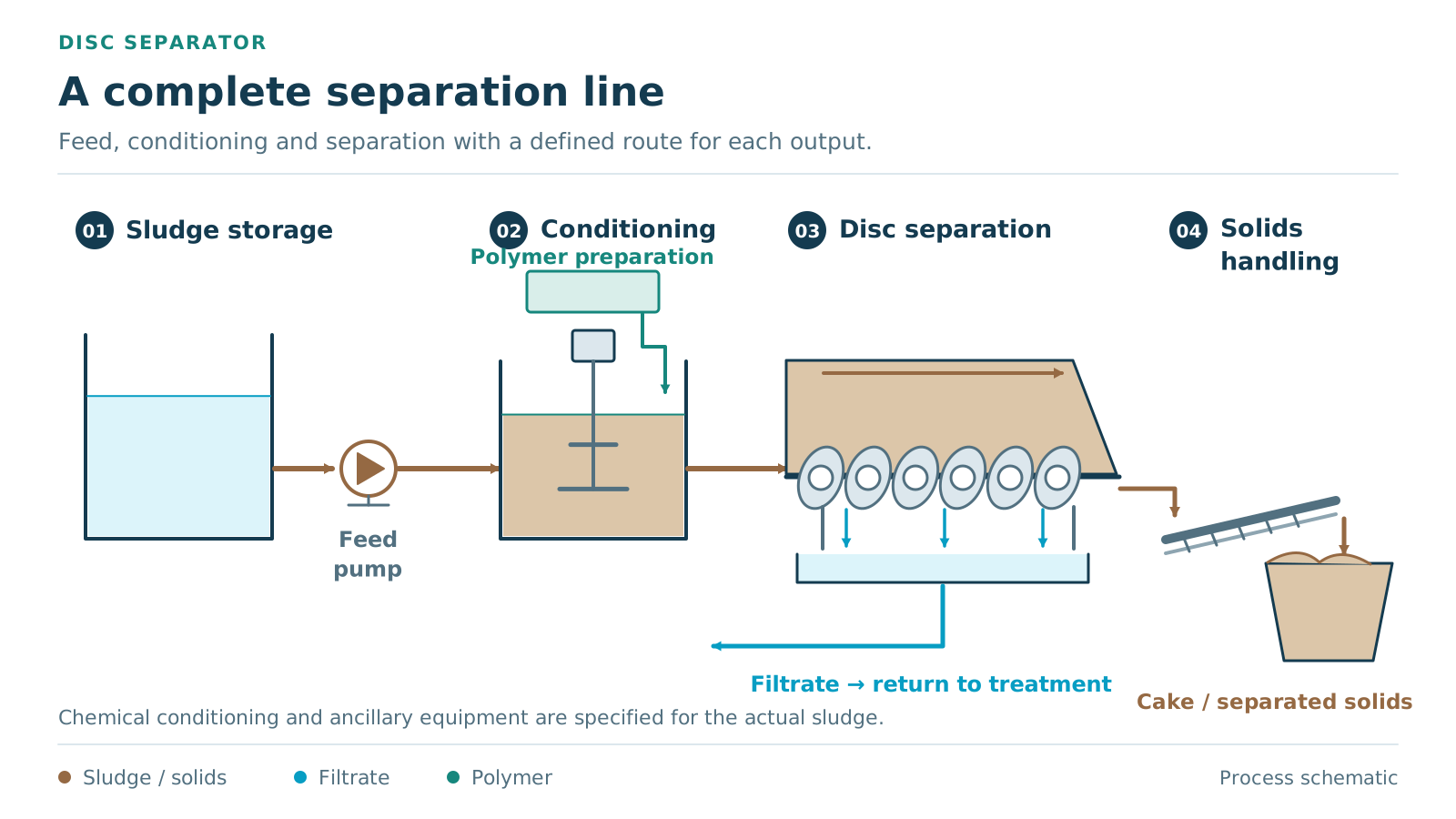
A separation test establishes whether solids are retained directly or require flocculation. We review capture, outlet concentration and filtrate quality to close the water and solids balance.
DAF separates through flotation. A disc separator retains solids mechanically. For an UltraFlux™ concentrate, we assess particle size, cohesion, grease and drainage to select discs or a screw press and define the filtrate return.
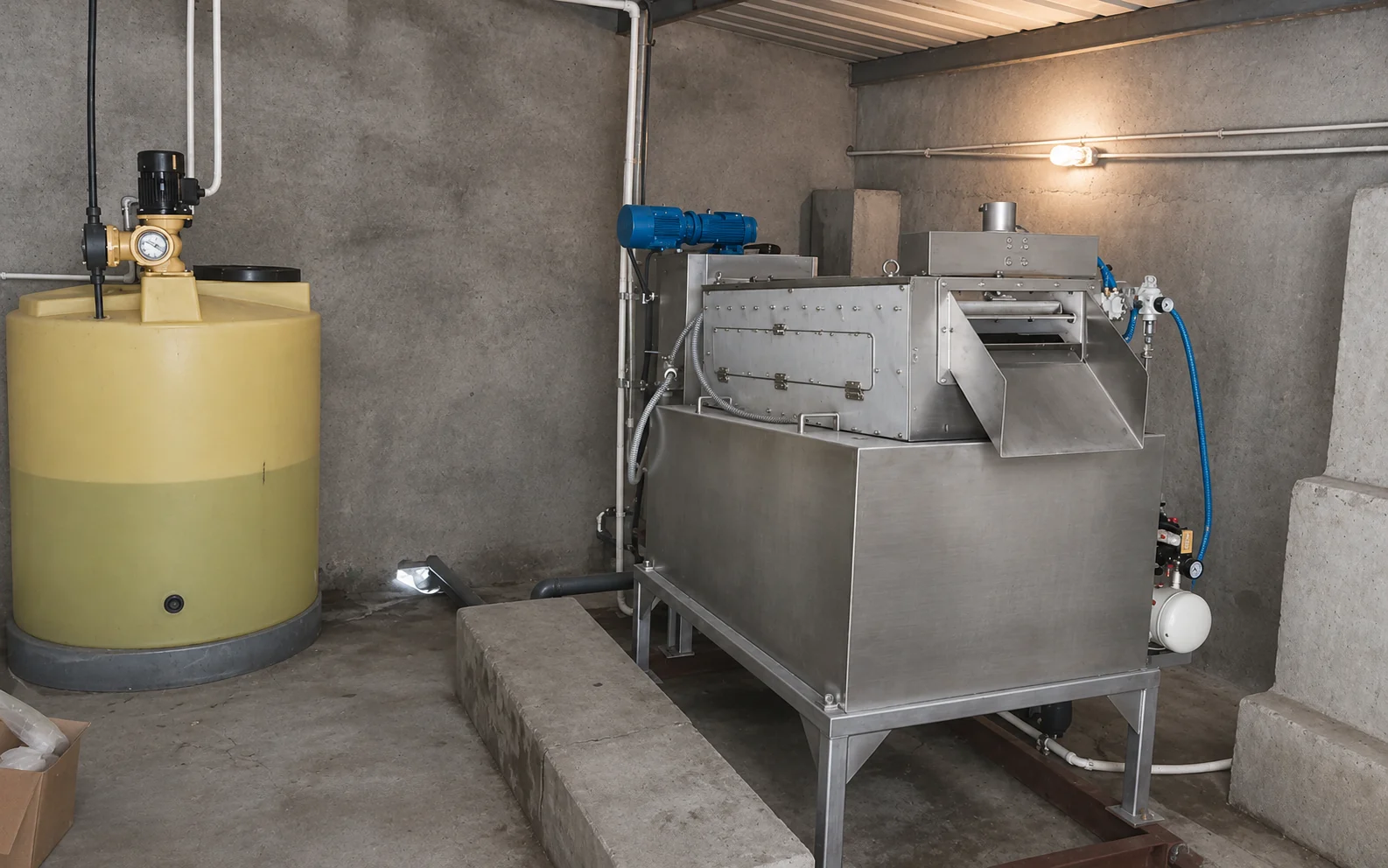
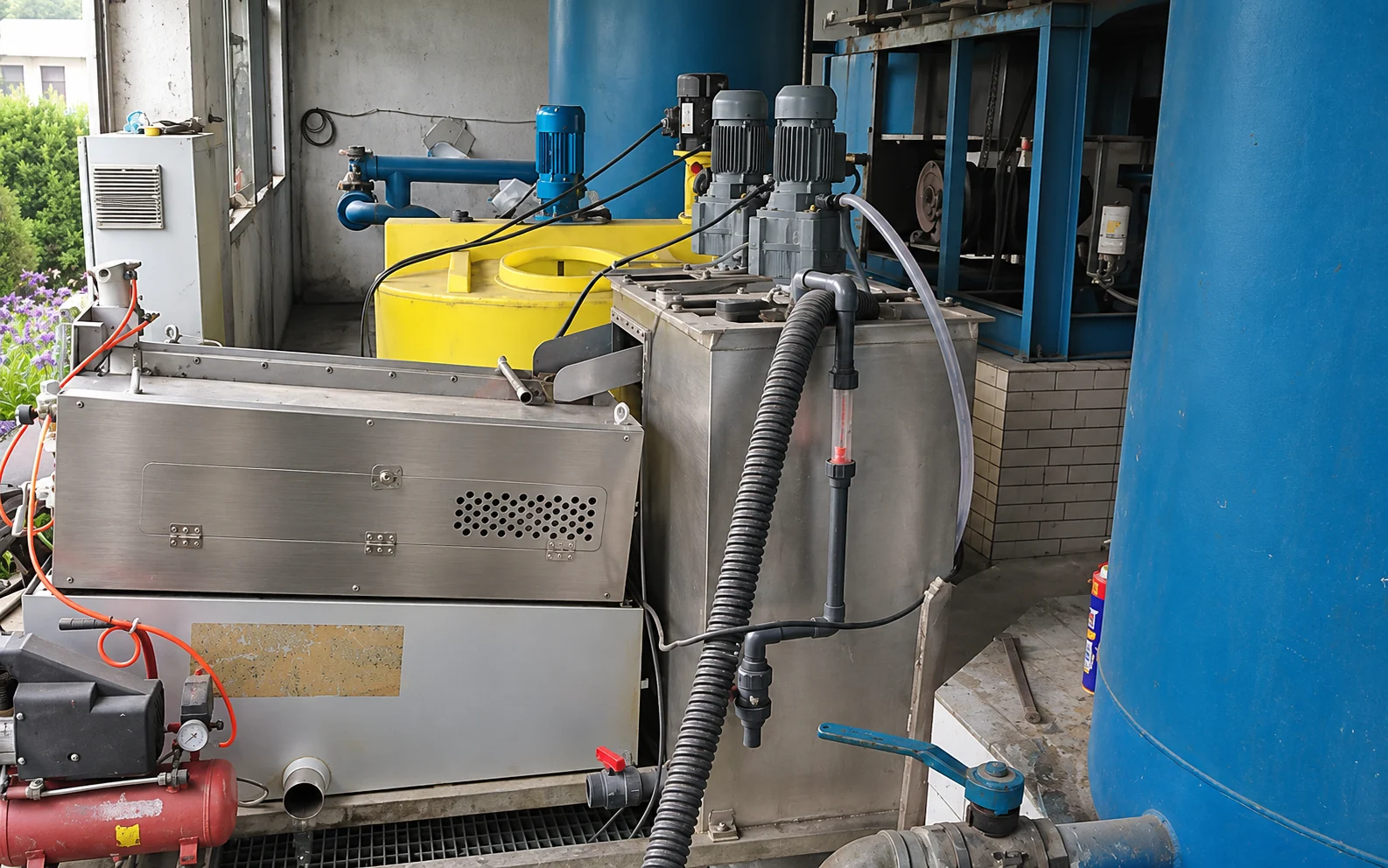
| m³/h at 10 / 20 g/L | Load (kg DS/h) | L × W × H (mm) | Power (kW) | Weight (kg) |
|---|---|---|---|---|
| 4 / 2 | 25–40 | 2300 × 1100 × 1400 | 1.2 | 500 |
| 6 / 3 | 40–60 | 2300 × 1200 × 1500 | 1.4 | 560 |
| 8 / 4 | 50–80 | 2400 × 1400 × 1500 | 1.4 | 630 |
| 12 / 6 | 80–120 | 2540 × 1650 × 1500 | 1.75 | 720 |
| 14 / 7 | 100–140 | 3180 × 2050 × 1650 | 2.85 | 810 |
| 16 / 8 | 120–160 | 3300 × 2250 × 1650 | 2.85 | 880 |
| 30 / 16 | 160–300 | 4633 × 2078 × 1862 | 2.9 | 1580 |
| m³/h | Reference load (kg DS/h) | L × W × H (mm) | Power (kW) | Weight (kg) |
|---|---|---|---|---|
| 8 | 18 | 1100 × 490 × 800 | 0.3 | To confirm |
| 21 | 49 | 2300 × 1000 × 1400 | 0.6 | 490 |
| 28 | 67 | 2300 × 1050 × 1500 | 0.6 | 550 |
| 42 | 100 | 2400 × 1240 × 1500 | 0.8 | 615 |
| 79 | 185 | 2540 × 1540 × 1500 | 1.5 | 700 |
| 98 | 230 | 3180 × 1540 × 1650 | 1.5 | 790 |
| 120 | 280 | 3300 × 1740 × 1650 | 2.25 | 850 |
| m³/h | L × W × H (mm) | Power (kW) | Weight (kg) |
|---|---|---|---|
| 14 | 1100 × 490 × 800 | 0.1 | 100 |
| 38 | 2300 × 1100 × 1400 | 0.2 | 450 |
| 55 | 2300 × 1200 × 1500 | 0.2 | 500 |
| 76 | 2400 × 1400 × 1500 | 0.4 | 565 |
| 110 | 2540 × 1650 × 1500 | 0.75 | 640 |
| 138 | 3180 × 2050 × 1650 | 0.75 | 720 |
| 167 | 3300 × 2250 × 1650 | 1.5 | 780 |
Reference data for equipment selection. Capacity, materials and utilities are confirmed for the project sludge and operating schedule.
It can be feasible where solids can be mechanically retained. Fine particles and difficult sludge may require flocculation. We check with the actual material and selected gap.
No. They involve different duties, loadings and configurations. Selection considers flow, dry-solids loading, capture and discharge concentration together.
Tell us the flow, solids type and whether you need screening, thickening or dewatering.
We will review the application and explain the solution we can supply or the information needed to assess it.
Contactcomercial@neptunoes.comEmail water analyses, photographs and drawings to our sales address.